Hello Casters! We’re here with our second and final scheduled update to the Sunstrike format. This article will cover the changes to the banlist we’re making today, but if you’d prefer to hear the details in a video format, you can find that below.
Please note as well that our Director of Player Experience Ben “RidiculousHat” Goodman will participate in a LIVE Podcast-style Interview with the hosts of the Expend to Draw podcast at 5pm Eastern Time today. You can find that link here: https://youtube.com/live/5kEpmgC4INY?feature=share
Let’s get to the content. We’re quite pleased with the way that the Sunstrike metagame has developed after our previous banlist window. The format has become quite diverse with a wide range of viable strategies. The premier from this previous weekend had 8 different archetypes in the top 8!
While the last couple of large banlists have had more of a need to triage major outstanding problems, we don’t have that same kind of context here. In fact, we actually don’t want to majorly reshape the Sunstrike format. Instead, our approach here will involve addressing individual high-variance outliers along with some future-proofing changes to effects that have historically been problematic. Unlike previous banlists, we’re going to start with unlimits and end with larger changes.
Unlimits
First of all, we have a couple of unlimits, starting with an unlimit to Ambrosia.
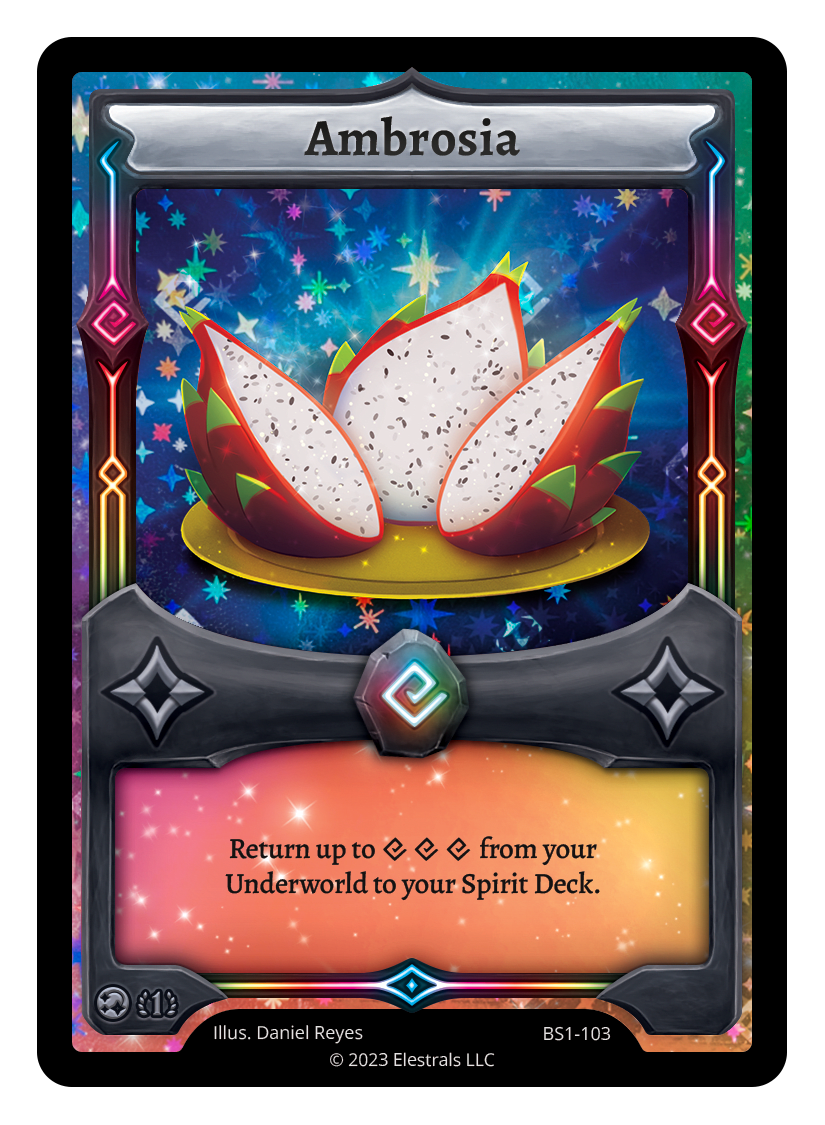
This card was semi-limited during our big banlist update in January. At the time, we were concerned about the large list of bans encouraging people to move back to “goodstuff piles” that hinged on Ambrosia for spirit fixing across multiple different elements. Back then, Ambrosia was played in 70% of decks or more.
However, with the rise of more cohesive gameplans, we’ve seen Ambrosia’s play rate drop significantly. In the last premier, it was only in about 25% of decks. We don’t think players are returning to the old strategies any time soon and we don’t anticipate a risk of Ambrosia homogenizing decklists, so we’re removing this restriction to allow players more options.
Secondly, we are unlimiting Kryovyrn.
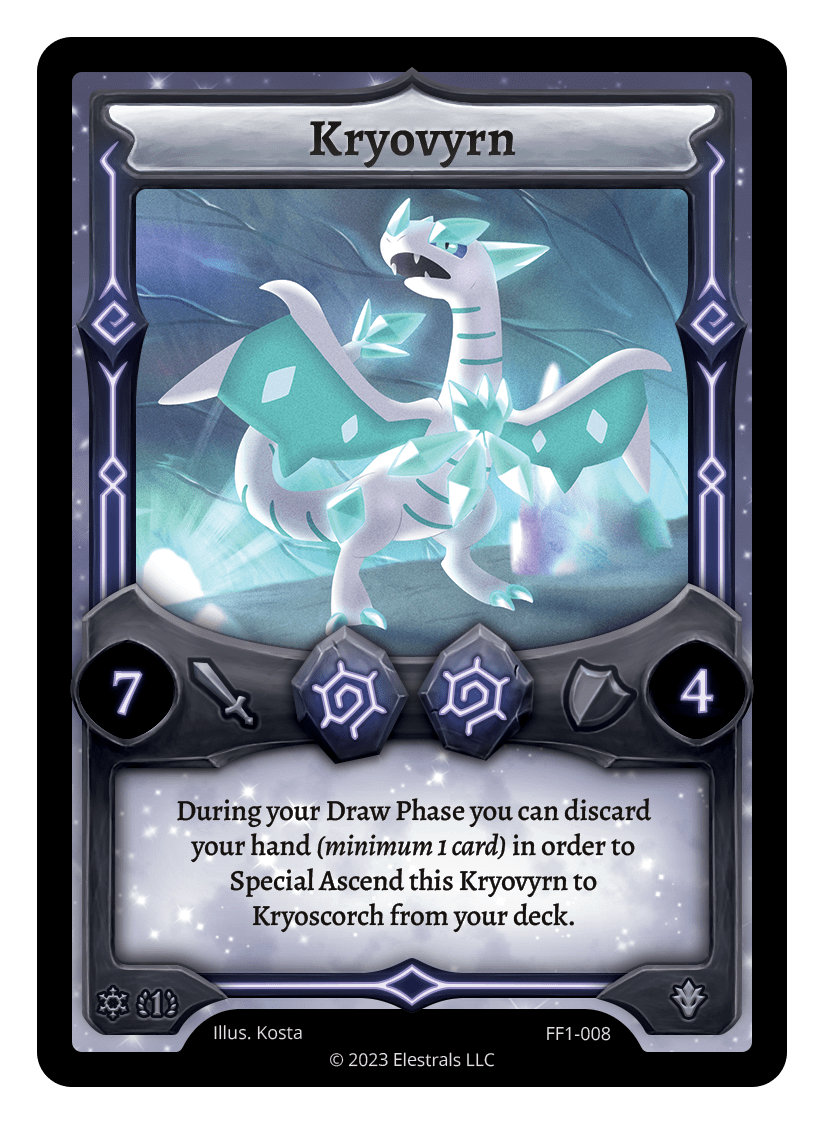
This card was limited in the same January banlist to avoid the possibility of Frost creating explosive boards with multiple 7 attack 2 spirit Elestrals in a single turn when combined with Emphrostix. However, at the time, we had quite a few other hits to Frost and didn’t want to overban the element into unplayability. As such, we went for the narrower change to Kryovyrn instead of the more impactful wide ban to Emphrostix.
Since then, the same experiences have come up and they’re clearly not Kyrovyrn’s fault - Frost decks are now doing similar things with Neandersloth Champ. And we’re even printing another Kryovyrn in Snowshade! It’s clear that this card was part of the problem but wasn’t the root cause. As such, we’re unlimiting Kryovyrn.
We do also have one more limit that we’re adjusting today, but we’ll cover that at the end of the article. While we’re discussing Kryovyrn, we should give context on the rest of the changes to Frost and Frost-adjacent strategies.
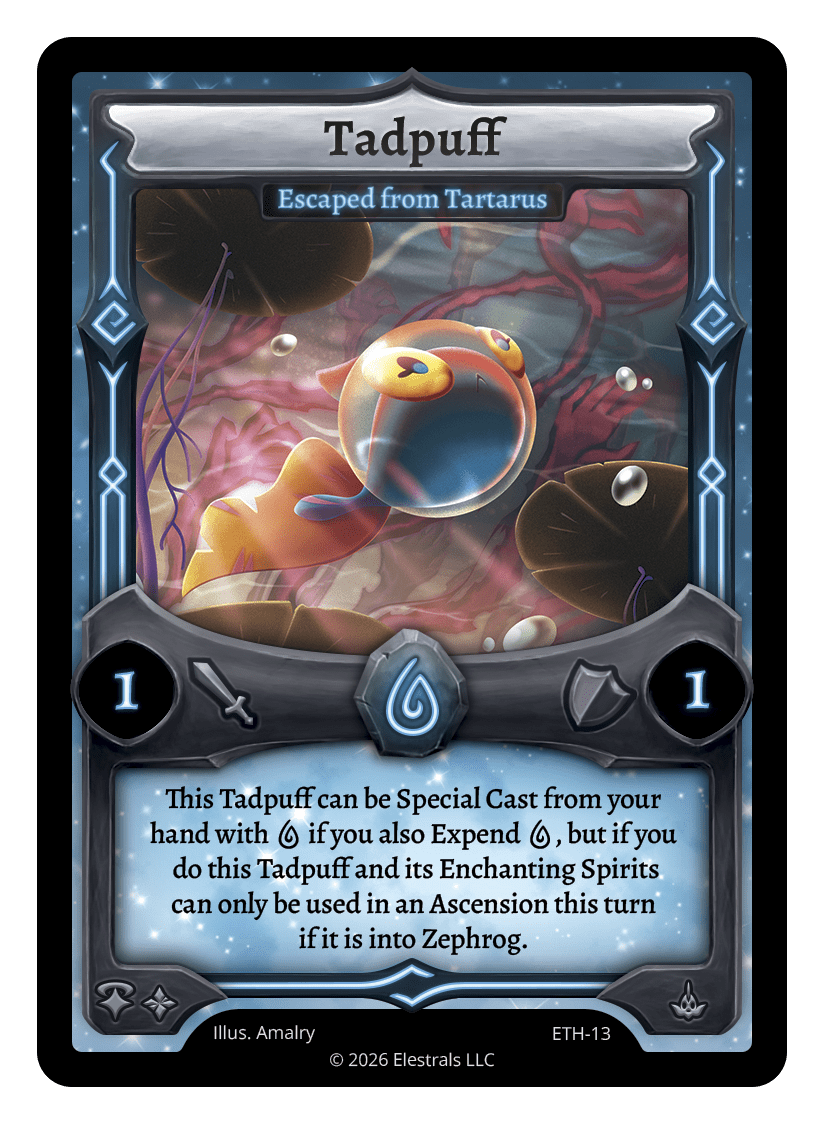
In previous banlists, we’ve had to take action against 1-cost Elestrals that bypass Normal Cast limits. The community has colloquially called these “Tadpuffs” in honor of the original Tadpuff and Tadfloe - these cards are high-variance and high-impact power plays that set up fast 2-drops in a way that isn’t in line with where we want the game to go. Some of these cards continue to perform as outliers and we’re going to take action again them today, starting with a ban to Emphrostix.
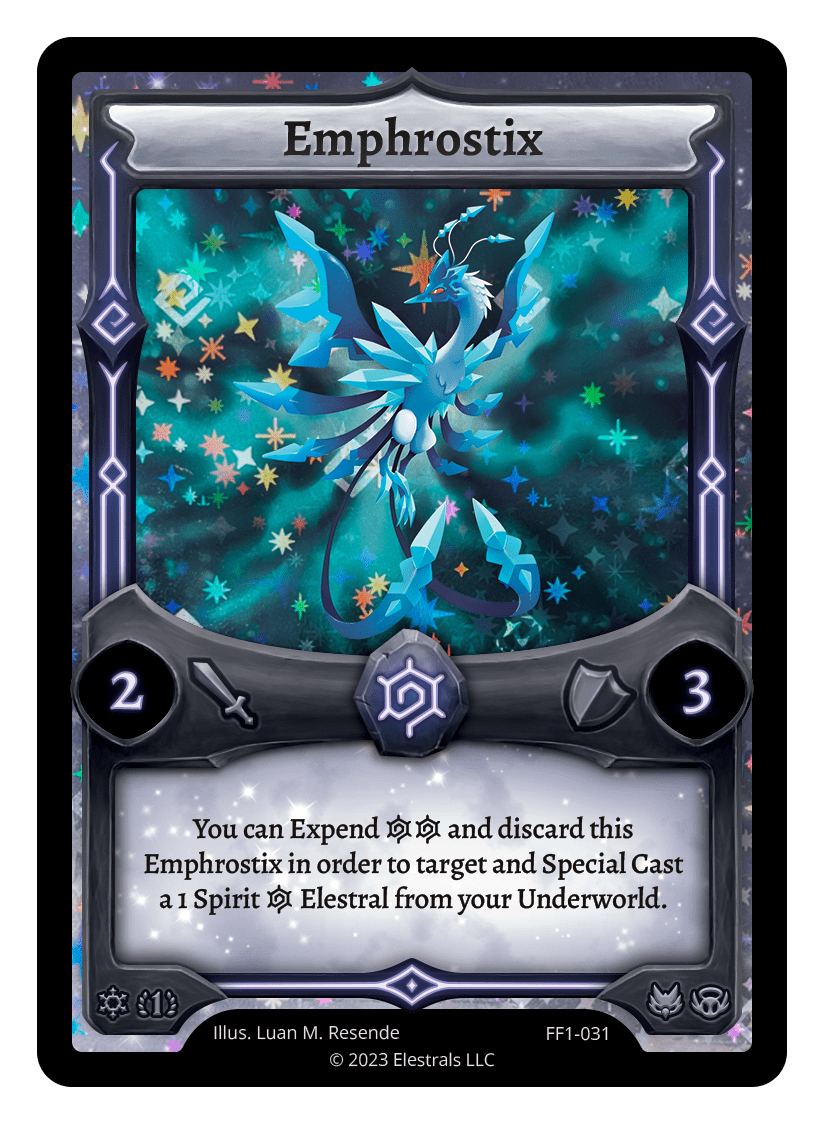
We got into the reasons around this above, but just to reiterate, this card was only spared to make sure we didn’t hit Frost too hard back in January. The context has changed and we are now much more at risk from allowing Emphrostix to put pressure on meta development in Snowshade.
In addition, this card is currently a menace in decks revolving around Neandersloth - Champion of Khione decks. Getting two Neandersloths out in one turn is oppressive and Emphrostix enables this better than any other card.
However, not all Neandersloth Champ decks play Emphrostix or even other Frost cards at all. “Sloth” has transcended from a single deck and instead has proven to be a highly flexible package of cards that can support multiple different shells. There’s a lot of power in the recursive loop around Neandersloth, but players have expressed that they feel the most hopeless when they face down TWO Neandersloth Champs. These decks get two Sloths into play surprisingly consistently, and at that point it is very difficult to truly stop the pressure of Paleoth Champ into Neandersloth Champ coming back over and over again. As such, we are limiting Neandersloth - Champion of Khione to 1.
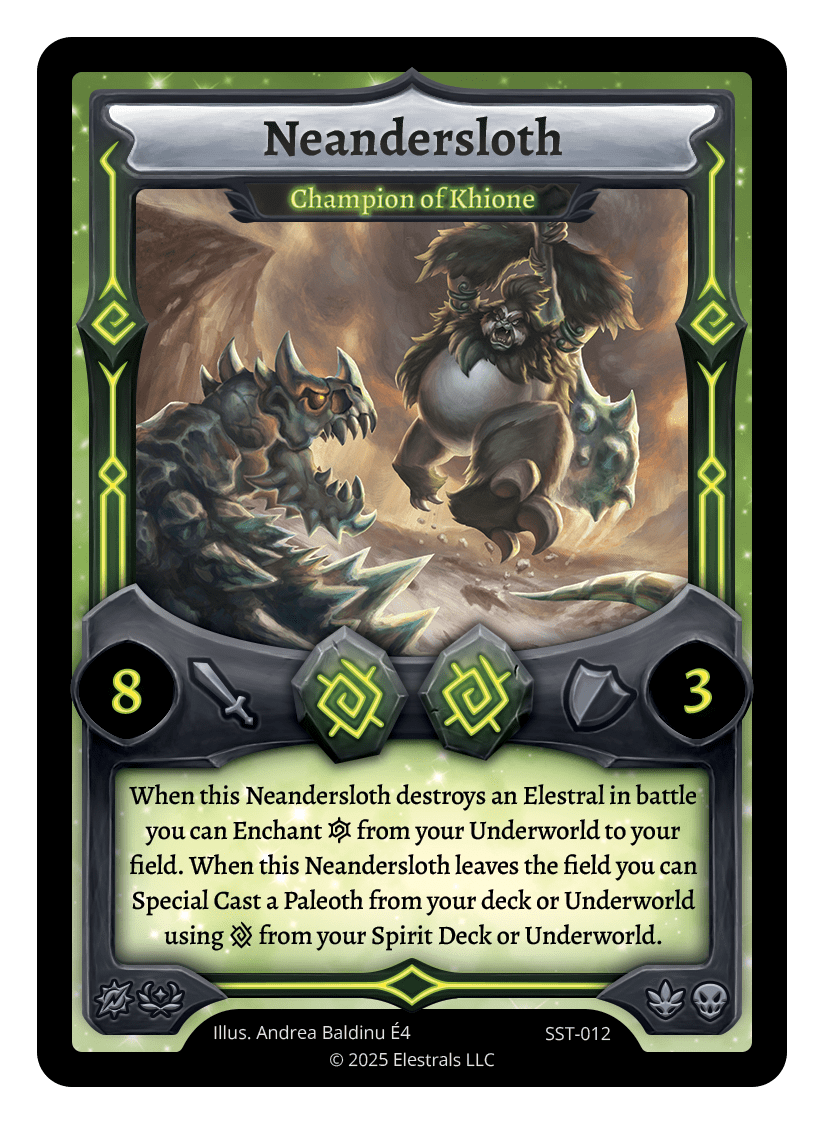
This limit along with the Emphrostix ban will change the dynamic here - while the Sloth loop won’t stop, it won’t scale up in quite the same way and won’t create such difficult boards to answer. We wouldn’t be surprised if players end up experimenting more with original Neandersloth, but that is a much less resilient threat that we don’t anticipate creating the same kind of self-sustaining offense.
With these changes, we don’t expect Sloth to leave the meta - but we do hope that it will have more counterplay than it does now. We’re also curious to see if players find anything with Kryoling and Kryovyrn in the Sloth shell.
We’re making a change to the Hera archetype today. The deck is a little too popular and wins a little too much, so we’re pulling it back in a way that doesn’t completely stop the core engine of the deck, but does stop it from skipping ahead on Normal Casts. Platypulse - Champion of Hera is banned.
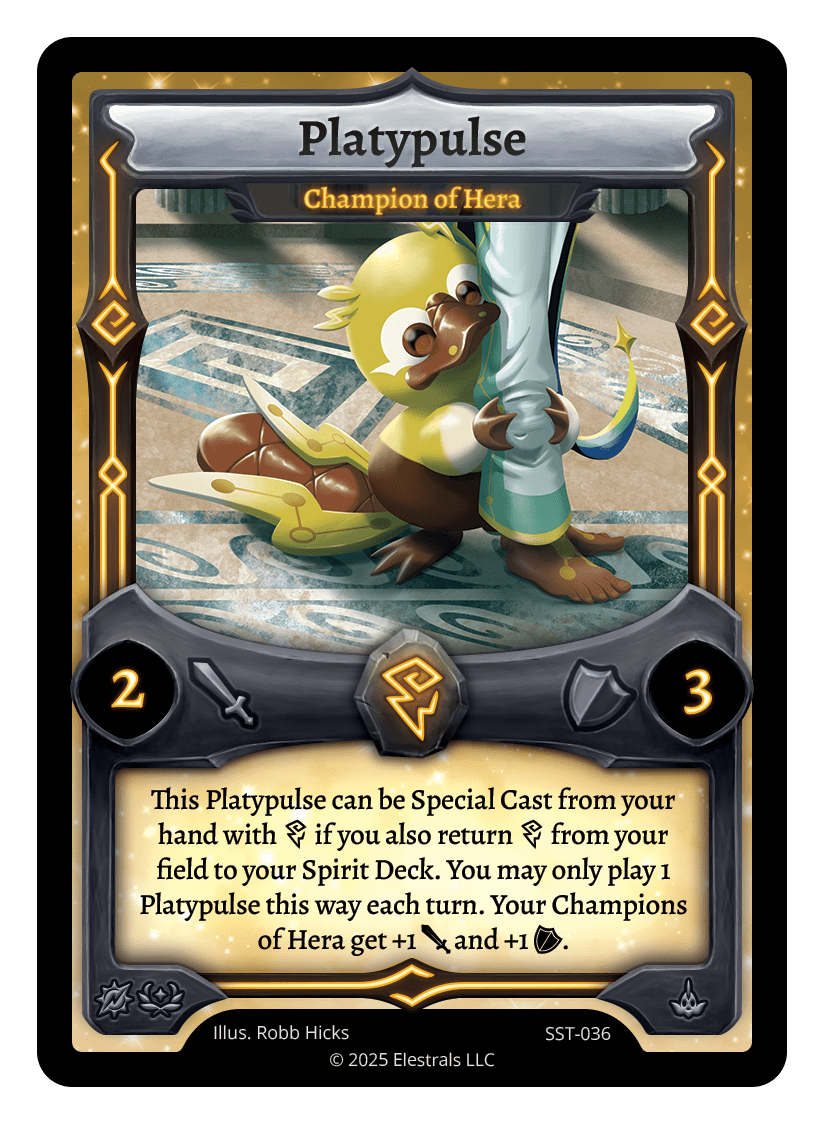
As another “Tadpuff” equivalent, this card also breaks the rules around Normal Casts and it does so in the current best deck in the format. By removing Platypulse Champ, it’ll be much harder to get Ohmperial - Champion of Hera into play and it’ll be much harder to incidentally win battles because of the persistent stat buff.
We don’t expect this change to remove Hera as a part of the metagame, but we do expect other decks to have more of a fighting chance. We also have one more adjustment to discuss - and that change was heavily informed by Hera’s presence in the format along with its play mechanics.
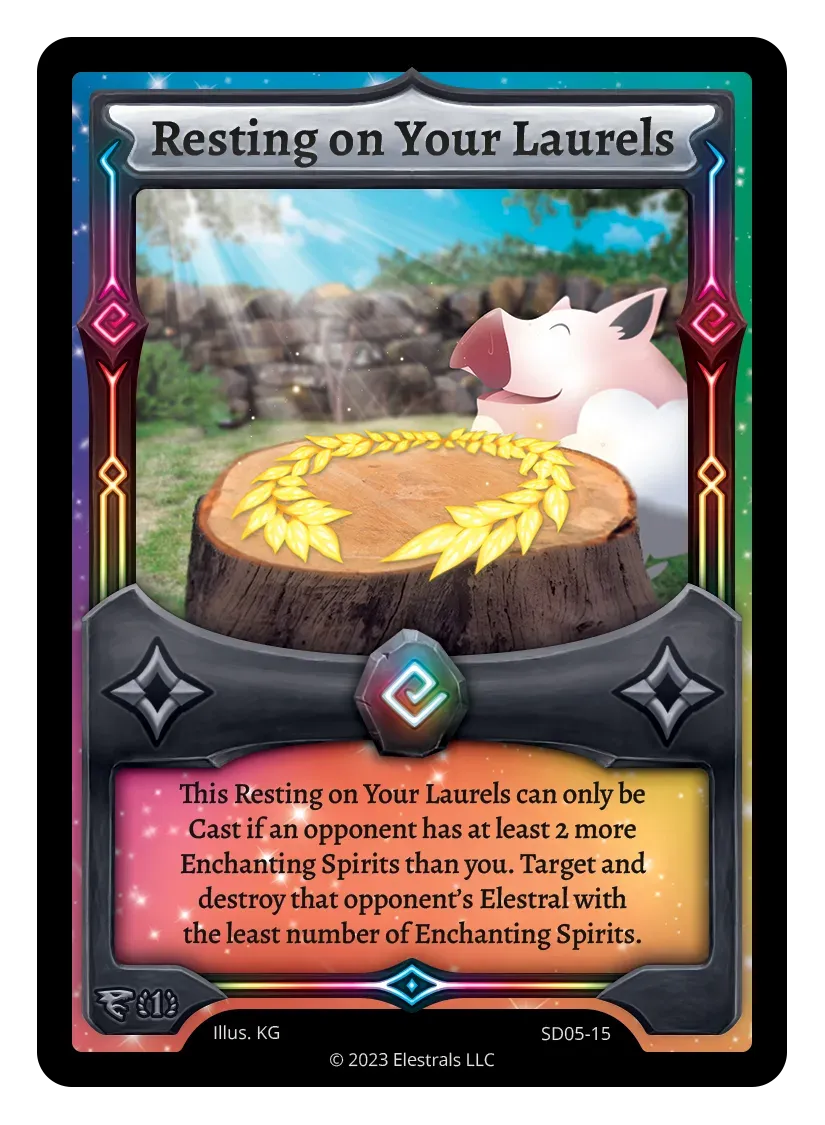
Our final change today was also the one that received the most testing from our internal team. Earthquake is banned. Resting on your Laurels is now semi-limited to 2 copies.
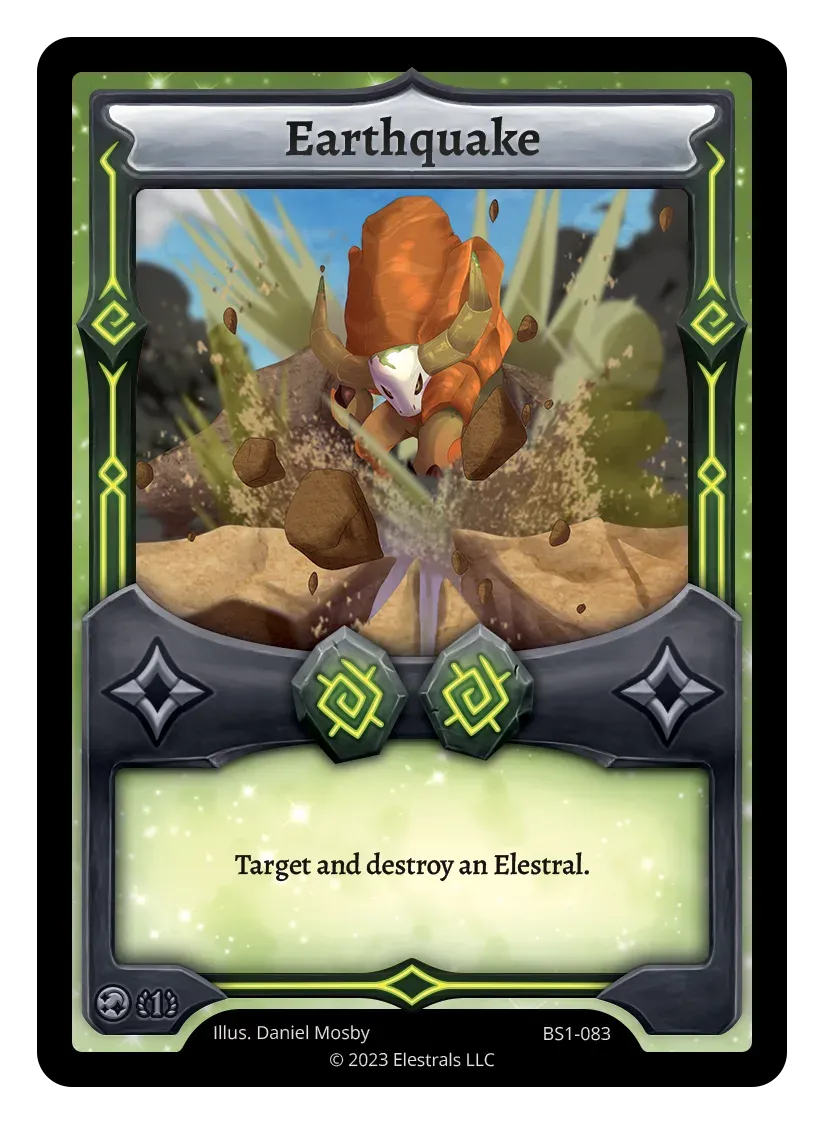
To start with Earthquake: This card has been around since the start and has proven to be antithetical to a lot of cool stuff in Elestrals. It punishes investment in Elestrals and normal casts, homogenizes decklists, and is hugely variant at 1 copy. Many matches have come down to “they drew the EQ”, and this has only gotten more extreme over time. And unfortunately, Earthquake doesn’t add flavor to the gameplay experience - exciting games are abruptly ended with a single EQ that cannot reasonably be planned for or played around.
But why does this reasoning not also apply to Resting on your Laurels? Well, “ROYL” is not quite the same as Earthquake. First of all, it’s not usable by all decks equally - some decks that live with more spirit presence on board have a harder time activating it, while other decks are able to consistently rely on it. While decks that “go wide” need a card like ROYL to undo big game-winning Elestrals, those same decks are also punished by it if they get a fast start.
While it’s not currently worth playing around Resting on Your Laurels at 1 copy that may not even be in the main deck, at 2 copies, it’s a removal rune that you can anticipate and play around, providing players more of a sense of agency.
We had originally tested a change of banning Earthquake and Resting on Your Laurels simultaneously to completely remove “generic” invoke removal from the game. However, this testing was done in a future environment where Gorgon’s Gaze is also banned. Without Gorgon’s, Elestral-based removal like Boombatt is way more likely to resolve successfully. In an environment with Gorgon’s, we’re much less sure that fast ascension strategies can be meaningfully answered, so we’re leaving ROYL available to help provide a potential response.
We’re hopeful that this change will help preserve the broad shape of the current environment but will meaningfully decrease the ways that players experience variance. This should also be a soft adjustment to Hera, which has particular trouble making sure Resting on Your Laurels is active. That deck relied on Earthquake more than most, so we expect the change to be quite significant.
We want to specifically address why this is a semi-limit and not a full unlimit. We want players to expect to be able to see one of these per game, but at 3 copies it is much more likely that you will see multiples in the same game. While we understand that it’s possible for players to have double-ROYL turns and we expect those to be quite powerful, we didn’t want to set up an environment where this happened consistently. We’re basically keeping the volume of premium invoke removal the same as it was before while removing Earthquake as an outlier.
We’re going to see how this change in particular fares in late Sunstrike and early Snowshade. Resting on Your Laurels is still not a perfect card and we don’t expect it to be around forever, but for now, it’s the right tool to have available.
With that explained, we should provide more context on our prior commentary about Gorgon’s Gaze.
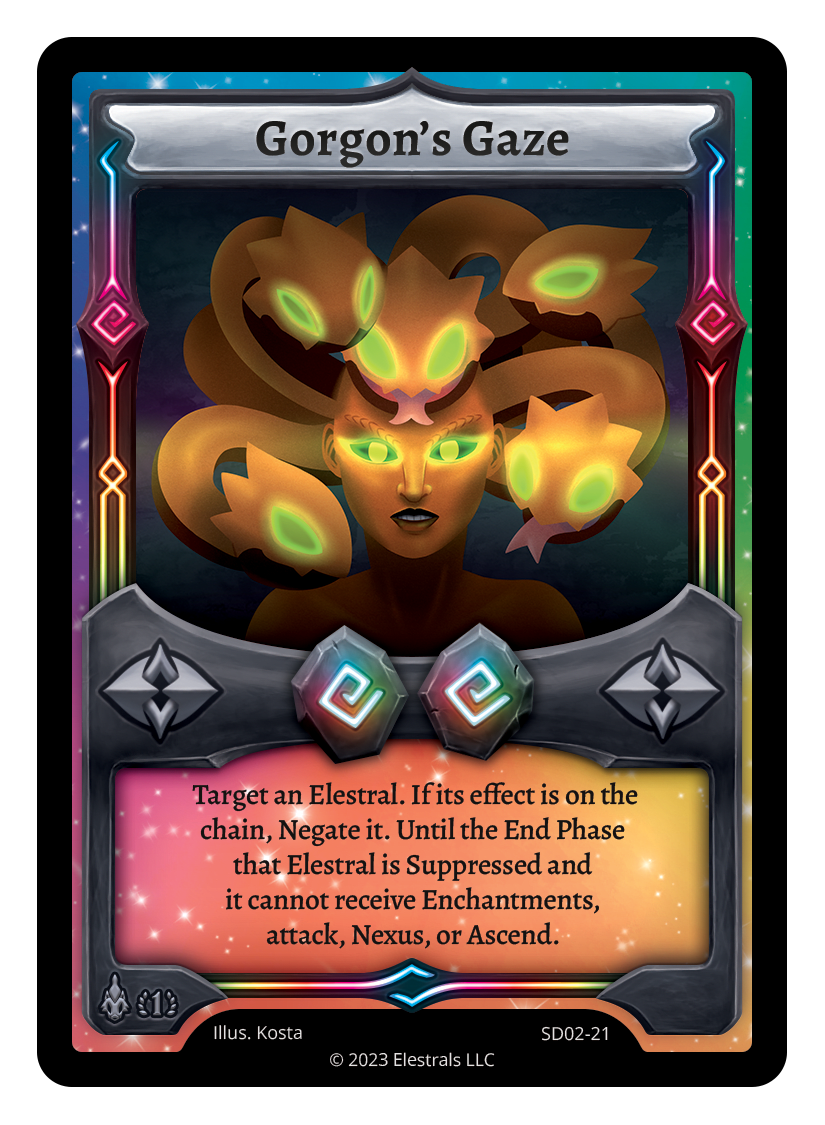
Future set testing is currently happening without Gorgon’s Gaze. We’ve still got some time before we catch up to that adjustment with the public, but we no longer believe that Gaze is “load-bearing” for the game.
However, this change is enormous in terms of impact for Elestrals and we want to make sure that we pick the right timing for an adjustment. That time is not today, nor is it soon enough that you should expect this change without additional warning from us. We’ve still got a lot of testing and planning to do.
For now, the most important thing for you to know is that we’re aware of the pressure that Gorgon’s Gaze places on the game and we’re building a future where that pressure can be relieved. When we have more to share here, we will.
As we announced at the start of Sunstrike, our banlist adjustment window will be once per set. We will have our next banlist window after 4 premier level events in the Snowshade format, counting both webcam premiers and the Columbus open. With our current schedule, this should happen in December. As a reminder, a scheduled window is not a commitment to any changes at that time.
The updates announced today will go live on Thursday September 10th and will be in effect for the premier on Saturday September 12th. In addition, starting September 10th, Tadpuff - Escaped from Tartarus will be legal for premier level play.
Thanks to everyone involved in getting us closer to the game we want to be - our staff, our testing team, and our community.